
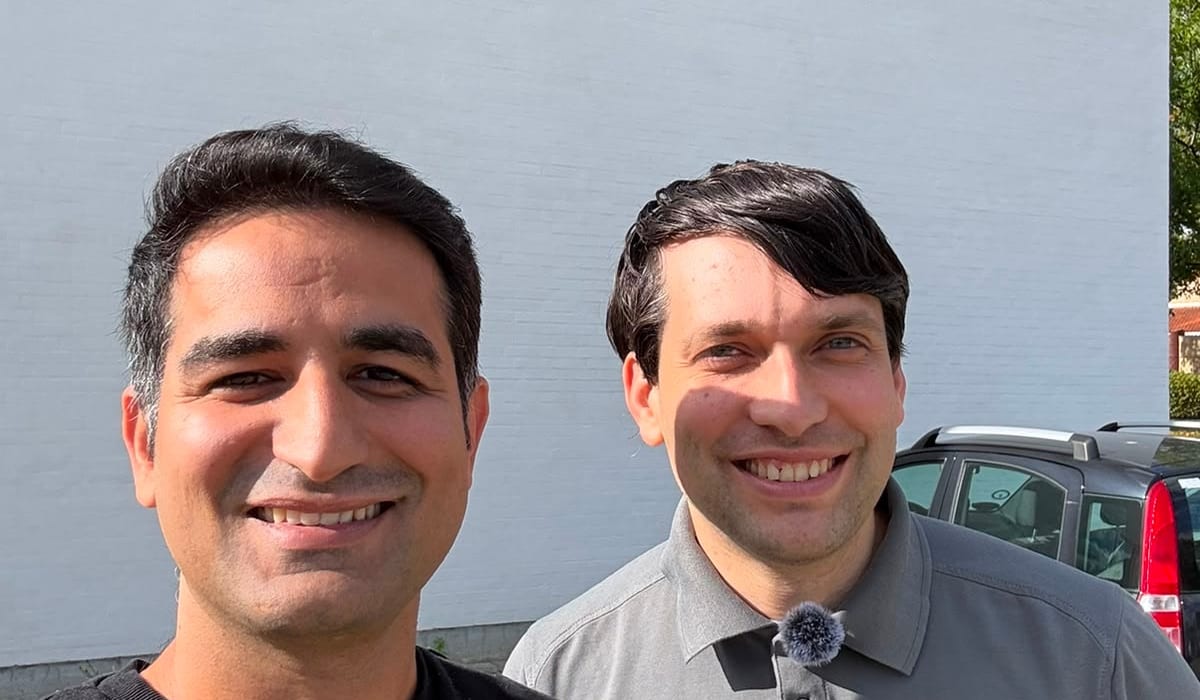
A Playdate That Turned Into a Robotics Conversation
It started simply enough. My six-year-old daughter wanted to spend time with her school friend, so I contacted the friend's father, Tudor, and we arranged for the children to play at Jumping Fun in Odense.
While the children jumped, Tudor and I started talking. The conversation moved naturally through business, technology, startups and engineering. That was when Tudor told me about his work with Inwatec and the challenge of automating industrial laundry operations.
I had not heard of Inwatec before that afternoon. By the time the children were ready to leave, I had arranged a visit to see the technology for myself.
The Problem Hidden Inside a Pocket
Industrial laundry operations handle enormous volumes of textiles every day. Hospitals, hotels, care facilities and other professional environments send large batches of clothing, bedding and uniforms through industrial washing systems.
The problem is what gets left inside those textiles. Needles, scissors, pens, screws, tools and other foreign objects are regularly forgotten in pockets and folds before laundry enters the washing process.
During my visit, Tudor showed me a simple example: a ballpoint pen forgotten inside a piece of clothing. Something that small can potentially contaminate or damage a much larger batch of laundry as it moves through the washing system. In environments like hospitals, the stakes are higher still. Workers manually handling and sorting laundry may encounter sharp or hazardous objects without warning.
Foreign objects can damage expensive machinery, contaminate large batches of textiles and create safety risks for the people working in these facilities. The industry has lived with this problem for a long time.
AI That Can Look Inside the Laundry
Inwatec's approach combines robotics, automation, X-ray detection, machine vision, software and AI to identify foreign objects before textiles continue through the industrial washing process.
The technology works by scanning laundry and using intelligent detection to identify objects that should not be there. Rather than relying on manual inspection, the system can flag potential issues automatically, reducing the risk of damage, contamination and injury.
This is a good example of AI being applied to solve a real industrial problem rather than being added simply because it is fashionable. The technology exists to address a specific, measurable challenge that the industry has accepted for years.
“Great innovation often starts with a simple question: Why are we still doing this manually?”
Watch Inside Inwatec Robotics in Odense
I had the opportunity to visit Inwatec and see some of the technology firsthand. Watch my short video from the visit.
Watch the visit on YouTube ShortsA short video from inside Inwatec Robotics in OdenseFrom SDU Student to Industrial Robotics
Tudor studied robotics engineering at the University of Southern Denmark (SDU) in Odense. He joined the Inwatec project through an internship.
During his early work, he was presented with a technical problem. According to Tudor, he worked on the problem over the weekend and returned with a solution. That initiative contributed to him receiving an opportunity to continue working on the project.
Tudor told me that he became the first software engineer working on the project. I am sharing this as he described it to me personally during my visit, rather than as independently verified company history.
From a Small Team to a Growing Robotics Company
During my visit, Tudor told me that what began with a very small team has grown into an organisation of more than 100 people. He described the growth as gradual and driven by the real commercial demand for the technology they were building.
I am presenting this as Tudor described it to me. I have not independently verified the current employee count through a published source.
An Odense Robotics Success Story
Odense has become one of Europe's most recognised robotics ecosystems. The University of Southern Denmark has played a significant role in developing engineering talent and supporting research that feeds into commercial ventures.
Inwatec is one example of how that ecosystem works in practice. A student joins a project through an internship, contributes to solving a real technical problem, and becomes part of a company that grows to serve international industrial customers.
Successful startup ecosystems require more than investment capital. They require skilled people, research institutions, companies, customers and real industrial problems to solve. Odense has built that combination over many years, and companies like Inwatec are part of the result.
From a Danish Idea to International Technology
Industrial automation of the kind Inwatec is developing can create value in several ways: reducing repetitive manual work, improving employee safety, detecting foreign objects before they cause damage, reducing equipment wear, increasing processing efficiency and improving sorting accuracy.
Industrial laundry is a global sector. The problem of foreign objects in laundry is not unique to Denmark. Technology developed in Odense to address this challenge has the potential to be applied in facilities across Europe and beyond.
Why I Wanted to Tell This Story
Through Startup Visa Denmark, I regularly meet entrepreneurs, founders and technology companies. One lesson I see repeatedly is that innovation does not necessarily begin with a revolutionary idea.
Often it begins by identifying a problem that an industry has accepted for years and asking: why does it have to work this way?
Inwatec is interesting because it demonstrates how engineering, software, robotics and AI can be combined to address a practical industrial challenge. The technology is not glamorous in the way that consumer apps or social platforms tend to be. But it is solving a real problem for real customers in a sector that handles millions of items every day.
Thank You to Tudor and Inwatec
I want to thank Tudor and the Inwatec team for giving Startup Visa Denmark the opportunity to visit, learn about the technology and film part of the experience. It was a genuinely interesting afternoon.
Sometimes networking happens at conferences. Sometimes it happens over coffee. And sometimes it happens while you're waiting for two six-year-olds to finish jumping on trampolines.
Want to learn more about Inwatec? Read our in-depth Inwatec story: From One Robot to 130+ Employees, featuring interviews with founders Lars Hansen and Mads Andresen, the full company history, and two embedded videos.
Building a Startup in Denmark?
If you're an international entrepreneur interested in building a startup in Denmark, understanding the Danish startup ecosystem, funding opportunities, business development or connecting with the local market, Startup Visa Denmark offers one-to-one consultations.

Founder – Startup Visa Denmark
Entrepreneur and business development professional based in Denmark, with experience building and supporting businesses across Europe and Southeast Asia. Through Startup Visa Denmark, Furqan shares stories, resources and practical insights from Denmark's startup ecosystem.
Sources & Further Reading
- Inwatec official website
- Odense Robotics cluster
- University of Southern Denmark (SDU)
- ·Personal visit and conversation with Tudor, Inwatec, September 2026